


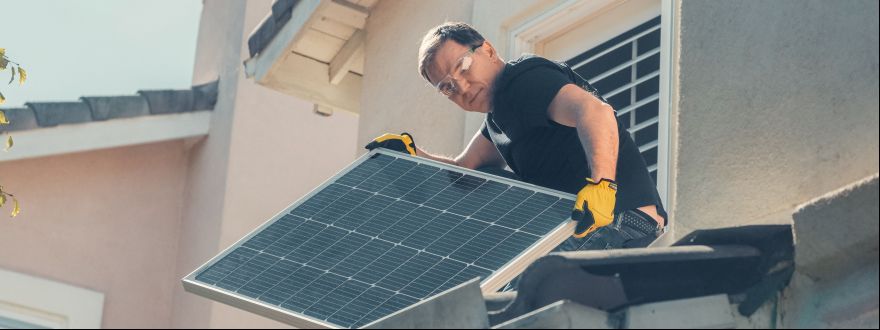
Solar energy has become increasingly common on Florida homes. For many homeowners, the appeal is easy to understand: lower electric bills, greater energy efficiency and the possibility of relying less on the traditional power grid.
But across Florida, a growing number of homeowners are discovering that the decision to install solar panels can come with risks they never expected.
Recent investigations have documented homeowners facing 25-year financing agreements, solar companies going bankrupt, systems that stop working, roof leaks, warranty problems and electric bills that never disappeared. Some homeowners have even found themselves struggling to sell their homes because of outstanding solar financing obligations.
For homeowners, there is another important question that deserves just as much attention:
How do solar panels affect your homeowners insurance?
As an insurance agency, we believe homeowners should understand both sides of the equation before making a major modification to their roof.
Florida Homeowners Are Being Left With Solar Systems and No Company to Service Them
One of the biggest concerns emerging in Florida's residential solar market is the number of installation companies that have shut down or entered bankruptcy.
A recent Central Florida investigation reported that several major residential solar businesses have filed for bankruptcy or stopped operating, leaving some homeowners with equipment on their roofs but no original installer available to service the system.
That can create a difficult situation.
Solar panels themselves may have manufacturer warranties, while installation workmanship may have been covered separately by the contractor. When the contractor disappears, homeowners can find themselves trying to determine:
- Who will repair the system?
- Is the manufacturer's warranty still valid?
- Who is responsible for labor costs?
- Who can safely remove and reinstall the panels when the roof needs repairs?
- Is the system properly permitted and approved for operation?
- Will another contractor agree to service equipment installed by a different company?
In some cases, homeowners are now turning to independent solar contractors willing to service these so-called "orphan" solar systems.
Unfortunately, hiring another contractor can mean additional out-of-pocket expenses.
A Solar Company Can Disappear. Your Solar Loan Usually Doesn't.
This may be the most financially painful lesson some Florida homeowners are learning.
Several homeowners interviewed in recent investigations said they were left with solar obligations ranging from approximately $40,000 to $60,000, with payment terms stretching as long as 25 years.
Meanwhile, some continued receiving significant utility bills.
One homeowner profiled by WPTV said her system stopped producing electricity while she continued making the solar payment. Her combined solar and utility costs eventually approached three times what she said she had been paying before installing the panels.
That highlights an important distinction:
The solar installer, the solar equipment manufacturer and the company financing the system may all be different businesses.
If the installer goes bankrupt, the financing agreement does not necessarily disappear with it.
Homeowners should understand exactly who they are doing business with before signing anything.
The Promise of "No More Electric Bill" Can Be Misleading
One of the themes appearing repeatedly in Florida solar complaints is the expectation that installing panels will eliminate the homeowner's electric bill.
That isn't necessarily what the written contract guarantees.
WPTV reviewed solar agreements containing language specifically disclaiming guarantees about electric-bill savings or system production. If the panels fail to generate enough electricity, homeowners may still be responsible for purchasing the difference from their electric utility.
That means a homeowner could potentially have:
A monthly solar payment + a monthly electric bill.
System sizing also matters.
Solar production should generally be evaluated against the home's actual electricity consumption rather than simply estimating based on the average dollar amount of a utility bill. One Central Florida solar contractor interviewed by ClickOrlando recommended reviewing a full year of electricity usage in kilowatt-hours before determining the appropriate system size.
Solar Panels Can Create Roof Problems
For an insurance agency, this is one of the most important issues in the entire discussion.
Solar panels are not simply appliances sitting on top of a house. Installing a rooftop solar system typically means attaching mounting hardware directly to one of the home's most important protective systems: the roof.
And improper installation can have serious consequences.
In one Treasure Coast case investigated by WPTV, homeowners reported a roof leak after solar installation. An engineering report obtained as part of their insurance claim found that the source of the leak was consistent with moisture entering around the solar-panel mounting brackets. The report also questioned whether the mounting system was approved.
A solar contractor interviewed in the same investigation described seeing installations where inadequate roof sealing resulted in enough damage that roofs ultimately needed replacement.
That is especially significant in Florida, where the condition and age of a roof can already have a major impact on homeowners insurance eligibility.
Will Homeowners Insurance Cover Solar Panels?
The answer is:
It depends on the insurance company, the policy and how the solar system is installed.
Homeowners should never assume their solar panels automatically receive the same coverage as the rest of the home.
The Florida Department of Financial Services specifically advises consumers that solar panels — and damage resulting from solar-panel installation — may be items that are not typically covered under a standard homeowners policy. The department recommends understanding policy exclusions and considering endorsements where necessary to address coverage gaps.
Citizens Property Insurance also advises homeowners to contact their insurance agent to determine the extent of coverage available for solar panels.
Policies and carrier underwriting guidelines can vary significantly.
That is why talking to your insurance agent before installing solar panels is extremely important.
Call Your Insurance Agent Before the Solar Installer Touches Your Roof
Homeowners frequently call their insurance agency after an installation has already been completed.
We would much rather have that conversation beforehand.
Before installing solar panels, homeowners should ask their insurance agent questions such as:
Does my insurance company allow rooftop solar panels?
Some carriers may have specific underwriting requirements involving solar systems.
Will the panels themselves be covered?
Do not assume they are automatically included. Ask how your specific policy treats permanently installed solar equipment.
Will installing solar panels change the replacement cost of my home?
Solar equipment can increase the cost of rebuilding or repairing a home after a major covered loss. Your dwelling coverage should accurately reflect your property's replacement cost.
Is damage caused by faulty installation covered?
This is particularly important. Damage resulting from defective workmanship or installation may be treated differently than damage caused by a covered event such as wind, hail or fire.
What happens after a hurricane?
If your roof and solar system are damaged during a storm, removing and reinstalling panels may become part of the repair process. Homeowners should understand whether those costs are covered and under what circumstances.
Could solar panels affect my future insurance options?
Florida homeowners insurance underwriting can change. A home modification that is acceptable to one insurance company may be treated differently by another.
Ask before making the investment.
Your Roof's Age Matters Before You Install Solar
A solar installation may last decades.
Your roof may not.
ClickOrlando's reporting notes that quality solar panels may have useful lives of approximately 25 to 30 years, while removing and reinstalling an array when a roof needs replacement can cost homeowners thousands of dollars in labor.
Imagine installing thousands of dollars' worth of solar equipment today only to discover five years from now that the roof underneath it needs replacement.
Now you are potentially paying for:
- Solar-panel removal.
- Roof replacement.
- Solar-panel reinstallation.
Before installing panels, have the roof evaluated.
In many situations, replacing an aging roof before installing solar may be far more practical than dealing with both projects several years later.
Solar Panels Can Complicate Selling Your Home
Financing is another area homeowners should understand before signing.
Solar systems may be purchased outright, financed through a loan or installed through lease or power-purchase arrangements. Those options can have very different consequences when the home is sold.
Recent Florida homeowners interviewed by WPTV described situations where outstanding solar obligations made selling their homes significantly more difficult.
Some solar agreements can require a buyer to assume an existing payment obligation, while others may require the homeowner to satisfy or buy out the agreement.
Either situation can become an unexpected obstacle during a real-estate transaction.
Before signing a solar contract, homeowners should ask:
"What happens if I sell this home five years from now?"
If the answer isn't crystal clear, don't sign yet.
Read the Contract — Not Just the Sales Presentation
Another troubling issue uncovered by WPTV involved differences between what homeowners said they were told during sales presentations and what was actually contained in their contracts.
Florida requires a separate disclosure for many residential solar agreements that can include important information about the total cost, payment schedule, financing, additional fees, warranties, potential liens and expected energy production. WPTV reported that some of the contracts it reviewed did not include that required disclosure.
The Florida Attorney General has also received nearly 750 consumer complaints involving just three solar companies examined in WPTV's investigation, according to records obtained by the station.
The lesson for homeowners is simple:
If a salesperson tells you something important, make sure you can find it in writing.
Verbal assurances regarding electric bills, warranties, tax savings, system production or resale should never replace reviewing the actual contract.
RELATED: Solar panel complaints mount on Treasure Coast as attorney general investigates companies
Questions to Ask Before Installing Solar Panels in Florida
Before signing a solar agreement, we recommend homeowners slow the process down and answer these questions:
About the contractor
- Is the contractor properly licensed?
- How long has the company been operating?
- Who is actually installing the equipment?
- Who handles repairs if the installer goes out of business?
About the roof
- How old is my roof?
- Has a qualified roofer inspected it?
- How will penetrations be sealed?
- Who is responsible if the installation causes a leak?
About the financing
- Am I buying, financing or leasing the system?
- What is the total amount I will pay?
- What is the interest rate?
- Does the payment increase over time?
- Is there a lien or other financial interest associated with the system?
- What happens to the financing when I sell the home?
About energy production
- How many kilowatt-hours did my home actually use during the previous 12 months?
- How much electricity is the proposed system expected to produce?
- Is that production guaranteed in writing?
- Will I still receive an electric bill?
About warranties
- Who warranties the panels?
- Who warranties the inverter?
- Who warranties the installation?
- Does the warranty cover labor?
- What happens if the installer disappears?
About insurance
- Does my current homeowners insurance company accept the solar system?
- Are the panels covered?
- Are there exclusions involving installation-related damage?
- Does my dwelling coverage need to increase?
- Could the system affect future insurance eligibility?
Already Have Solar Panels? Here's What We Recommend
If solar panels are already installed on your home, now is a good time to organize your documentation.
Keep copies of your:
- Solar contract
- Financing or lease agreement
- Installation warranty
- Equipment manufacturer warranties
- Building permits
- Final inspection documents
- Utility approval or Permission to Operate
- Roof inspection documentation
- Solar company correspondence
Homeowners whose original installer has gone out of business may also want to identify the manufacturers of their panels and inverter. Manufacturers may be able to direct them to qualified contractors who can service warranty claims or repair the equipment.
And from an insurance standpoint, make sure your agent knows the panels are there.
Do not wait until there is a roof leak, hurricane claim or renewal problem to have that conversation.
Solar Panels Aren't Necessarily the Problem — Unanswered Questions Are
Solar energy can make sense for some Florida homeowners.
The concern isn't simply "solar panels are bad."
The concern is that installing a solar system can combine construction, roofing, electrical work, long-term financing, warranties, real estate and homeowners insurance into one very expensive decision.
Homeowners should understand every one of those pieces before signing.
Recent stories from across Florida demonstrate what can happen when they don't: homeowners paying solar loans long after installation companies disappear, families paying both solar loans and significant electric bills, roofs damaged around panel mounts, warranties that become difficult to use and homeowners struggling to sell properties encumbered by solar agreements.
Before anyone drills into your roof, call your insurance agent.
Our agency can review your current homeowners policy, discuss how your insurance company approaches solar panels and help you understand potential coverage concerns before you make a long-term commitment.
Because the best time to discover an insurance problem with solar panels is before they're installed — not after you have a claim.
Photo courtesy of Kindel Media via Pexels.com