


As Florida homeowners continue to face elevated insurance premiums, some are considering a drastic cost-cutting measure: paying off their mortgage and canceling their homeowners insurance.
This is commonly called “self-insuring.” Instead of paying an insurance company to assume certain risks, the homeowner accepts full financial responsibility for repairing or rebuilding the home after a loss.
At first glance, the idea can seem reasonable. A homeowner who has not filed a claim in many years may wonder why they should continue paying thousands of dollars annually for coverage they may never use. However, in a catastrophe-prone state like Florida, self-insuring a home can expose a family to financial losses far greater than the premiums they hoped to save.
What Does It Mean to Self-Insure a Home?
Florida law does not generally require homeowners to carry homeowners insurance. However, mortgage lenders typically require coverage because they have a financial interest in the property. Once the mortgage is paid off, the homeowner may have the option to cancel the policy.
Canceling the policy does not eliminate the risks facing the home. It simply transfers those risks from the insurance company back to the homeowner.
A truly self-insured homeowner would need enough readily available money to cover potentially:
- Repairing or completely rebuilding the home
- Replacing furniture, appliances and personal belongings
- Paying for temporary housing during repairs
- Removing debris and damaged materials
- Bringing the rebuilt structure up to current building codes
- Defending against a liability lawsuit
- Paying medical expenses if someone is injured on the property
In other words, self-insuring involves much more than having enough savings to replace a roof.
More Florida Homeowners Are Taking the Risk
A WTSP report cited Insurance Information Institute research indicating that more than 15% of Florida homeowners were self-insuring, compared with approximately 7% before the pandemic. Insurance experts interviewed for the report described the trend as especially concerning in a state with significant hurricane and catastrophe exposure.
The motivation is understandable. Some Florida households have experienced steep insurance increases, and owners living on fixed incomes may feel pressured to choose between coverage and other essential expenses.
Nevertheless, affordability and risk are separate questions. A policy may feel expensive, but canceling it does not necessarily make the underlying financial exposure affordable.
One Florida Homeowner Learned the Hard Way
A recent story highlighted the danger of assuming that a paid-off home no longer needs protection. According to the report, a Florida homeowner canceled his insurance after paying off his mortgage. Approximately two months later, Hurricane Milton tore the roof from the home. Because the policy had been canceled, the homeowner was responsible for the damage himself.
This represents the central problem with self-insurance: the timing of a loss is unpredictable.
A homeowner may save premiums for several years without experiencing serious damage. But one hurricane, house fire, lightning strike or liability claim could erase those savings many times over.
Insurance is not intended to make every homeowner financially better off each year. Its primary purpose is to protect against losses that would be difficult—or impossible—for most households to absorb independently.
RELATED: Florida man paid off his house, dropped insurance, and Hurricane Milton tore off the roof
Florida’s Catastrophe Exposure Changes the Calculation
Self-insuring may carry substantial risk anywhere, but Florida’s exposure to hurricanes, windstorms, tornadoes, lightning, flooding and other severe weather makes the decision especially consequential.
NOAA reports that tropical cyclones have caused more total damage than any other category of billion-dollar U.S. weather disaster. As of the end of 2024, hurricanes had caused more than $1.5 trillion in damage nationwide, averaging approximately $23 billion per event. NOAA also reported that Florida led the country in cumulative costs from billion-dollar disasters since 1980, largely because of hurricanes.
A direct hurricane strike is not the only concern. A home can sustain serious damage from:
- Wind-driven rain
- Falling trees and branches
- Tornadoes embedded within a hurricane
- Fire or electrical damage after a storm
- Extended power outages
- Theft or vandalism after an evacuation
- Water damage from a covered plumbing failure
- Debris from neighboring structures
Even a loss that does not destroy the entire home can generate a repair bill reaching tens or hundreds of thousands of dollars.
Your Home’s Market Value Is Not the Maximum Possible Loss
One common mistake is assuming that a homeowner only needs savings equal to the home’s market value.
Market value includes factors such as the neighborhood, school district, lot and current real estate demand. Insurance primarily focuses on the cost of repairing or rebuilding the structure and replacing covered property.
After a widespread catastrophe, rebuilding costs may increase because contractors, materials, temporary housing and skilled labor are all in high demand. Demolition, debris removal, engineering and permitting can add further expenses. A rebuilt home may also need to comply with building codes that were not in effect when the original home was constructed.
The Insurance Information Institute explains that a self-insurer’s total potential financial exposure could approach or exceed twice the value of the home when the lost property, rebuilding expense and other financial consequences are considered.
For most homeowners, keeping that much money liquid and available would be unrealistic.
Insurance Protects More Than the Building
Homeowners insurance is often thought of as “hurricane insurance,” but a typical policy may provide several important categories of protection, subject to its terms, limits, deductibles and exclusions.
Florida’s Department of Financial Services explains that homeowners insurance protects a policyholder’s financial interests when the home is damaged or destroyed by a covered peril, such as a fire, tornado or hurricane. Policy forms vary, so homeowners should carefully review the exact coverage provided by their policy.
Depending on the policy, coverage may include:
Personal Property
Furniture, electronics, clothing, appliances and other belongings may be damaged along with the house. Replacing the contents of an entire home can become a major expense.
Additional Living Expenses
If a covered loss makes the property uninhabitable, a policy may help pay for temporary housing and certain additional expenses while repairs are completed. A self-insured homeowner must pay those costs while simultaneously funding the repairs.
Personal Liability
If a guest, contractor or delivery person is injured on the property and alleges that the homeowner was negligent, liability coverage may help defend the homeowner and pay covered damages.
Without insurance, the homeowner may need to hire an attorney and personally fund any settlement or judgment.
Other Structures
Detached garages, fences, sheds and similar structures may also represent significant value that must be considered when evaluating the true cost of self-insurance.
RELATED: Florida homeowners are self-insuring. Experts say it's a 'troubling trend.'
Homeowners Insurance Does Not Replace Flood Insurance
Maintaining homeowners insurance is important, but it does not mean a property is protected against every type of loss.
Most homeowners insurance policies do not cover flooding. Flood insurance is generally purchased separately through the National Flood Insurance Program or a private flood insurer, although some homeowners companies may offer flood coverage through an endorsement.
Flooding can occur outside areas officially classified as high risk. FEMA warns that floods can happen almost anywhere, and even a relatively small amount of water can cause substantial damage.
For Florida homeowners, a complete risk-management conversation should therefore address both homeowners and flood insurance. Canceling a homeowners policy does not create flood coverage, and carrying homeowners insurance alone does not normally protect against rising water or storm surge.
Disaster Assistance Is Not a Substitute for Insurance
Some homeowners assume that federal or state disaster programs will pay to rebuild their home after a major hurricane.
Disaster assistance should not be treated as a replacement for insurance. Availability depends on the event, government declarations, eligibility requirements and the specific losses involved. Assistance may come in the form of limited grants or loans rather than enough money to restore the homeowner fully.
A family that self-insures should be prepared to recover using its own funds, even if outside assistance is delayed, limited or unavailable.
The Risk to Retirement and Emergency Savings
Many people who own their homes outright are retirees or homeowners approaching retirement. Their home may represent one of their largest assets.
Using retirement accounts, investment funds or emergency savings to rebuild after a catastrophe can create additional consequences. The homeowner may have to sell investments during an unfavorable market, incur taxes on withdrawals or reduce the amount of money available for future living expenses and medical needs.
That means the real risk is not limited to the house. One uninsured loss can affect the homeowner’s entire financial plan.
A home may be paid off, but the cost of rebuilding it is not.
Alternatives to Canceling Your Coverage
Homeowners struggling with insurance costs may have options to reduce their premium without canceling coverage entirely. Before making changes, it is important to understand what protection would be reduced or eliminated and whether the potential savings justify the additional financial risk.
Possible strategies may include:
- Comparing quotes from multiple insurance companies
- Increasing the deductible to an amount the homeowner could comfortably afford after a loss
- Reviewing whether the dwelling limit accurately reflects the cost to rebuild the home
- Reducing personal property coverage, also known as contents coverage, if the current limit is higher than the value of the homeowner’s belongings
- Removing personal property coverage when available and appropriate, while recognizing that furniture, appliances, clothing and other belongings would no longer be insured
- Changing personal property coverage from replacement cost to actual cash value, which may reduce the premium but would account for depreciation when a claim is paid
- Reducing or removing optional endorsements, such as Ordinance or Law coverage, personal property replacement cost coverage, pool cage coverage or other property-specific enhancements
- Reviewing coverage for detached structures, fences, sheds and other items that may not require the current limits
- Completing eligible wind-mitigation improvements
- Obtaining or updating a wind-mitigation inspection
- Installing protective devices that may qualify for discounts
- Bundling eligible policies when it provides a meaningful benefit
- Reviewing available private-market and Citizens Property Insurance options
- Discussing coverage adjustments with an independent insurance agent
Reducing or removing coverage can lower premiums, but it also increases the amount a homeowner may need to pay after a loss. For example, removing Ordinance or Law coverage may leave the homeowner responsible for additional costs required to rebuild damaged portions of the home in compliance with current building codes. Removing pool cage coverage could leave the homeowner responsible for repairing or replacing the enclosure after storm damage.
The goal should not simply be to find the lowest possible premium. A better approach is to identify which risks the homeowner can reasonably retain and which losses would be too financially damaging to absorb without insurance.
A knowledgeable independent agent can help evaluate the tradeoffs among premium, deductibles, coverage limits, exclusions and optional endorsements before significant coverage is reduced or removed.
Could Anyone Realistically Self-Insure?
A small number of financially secure homeowners may have sufficient liquid assets to accept the risks. However, being able to pay for a roof replacement is not the same as being able to self-insure a home responsibly.
Before considering cancellation, a homeowner should ask:
- Could we rebuild the entire home without borrowing money?
- Could we replace all our belongings?
- Could we pay for temporary housing for a year or longer?
- Could we absorb a large liability claim and legal-defense costs?
- Would rebuilding require us to use retirement funds?
- Would the loss permanently change our financial future?
- Are we comfortable accepting all of these risks to save the annual premium?
If any answer is no, the homeowner may not truly be in a position to self-insure.
A Paid-Off Home Is Still Worth Protecting
Paying off a mortgage is a major accomplishment. It removes the lender’s financial interest from the property—but it does not remove hurricanes, fires, liability claims or unexpected accidents.
For many Florida families, the home is the result of decades of work and one of the most valuable assets they will ever own. Canceling coverage may reduce an annual expense, but it can place the entire value of that asset at risk.
Before making such a significant decision, homeowners should speak with a qualified insurance professional and carefully review what they would be giving up. In many cases, adjusting coverage, comparing companies or identifying available discounts can offer a safer path than becoming completely uninsured.
Evolve Insurance Agency helps Florida homeowners compare available coverage options and understand the protection provided by their policies. Contact our team for a personalized homeowners insurance review before deciding whether to reduce or cancel your coverage.
This article is provided for general informational purposes only and is not financial, legal or insurance advice. Coverage varies by insurance company and policy. Please review your policy documents and consult a qualified professional regarding your individual circumstances.
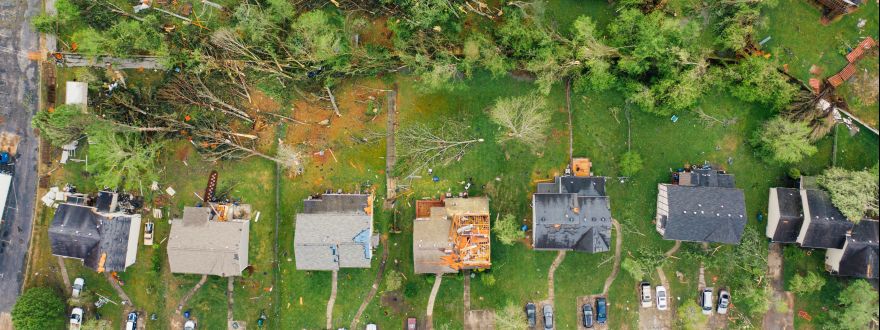
Photo provided courtesy of 'K / Kelly' via Pexels.com